
Reorder Blocks and Parsons Problems: When the Bug Is Syntax, Not Logic
Why line-ordering puzzles help beginners and how they complement classic LeetCode-style problems in a balanced curriculum.
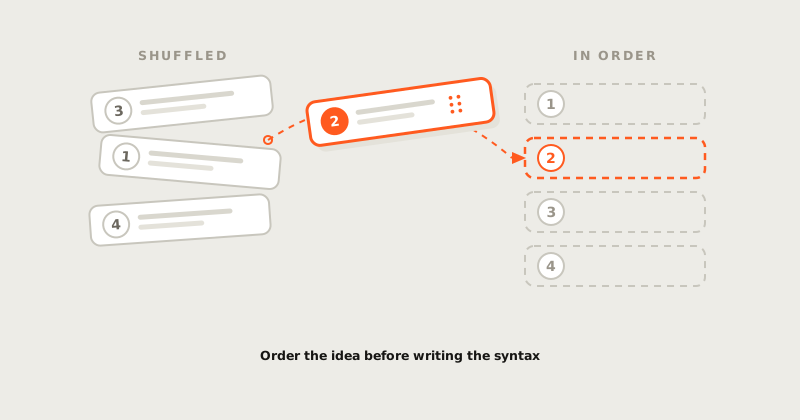
Sometimes a student understands the algorithm and still fails. The gap isn't the idea. It's that they can't yet translate intent into valid code. Parsons-style tasks (reorder lines or blocks) isolate that one skill, with no blank page to fill.
What Parsons problems train
- Control flow literacy covers loops, conditionals, and early exits in the right order.
- API memory is knowing which helper to call and when.
- Debugging muscle is catching a line that cannot run where it was placed.
When to use them in a course
Use Parsons early in a unit to reduce cognitive load, then graduate to partial scaffolding, then to blank-editor problems.
This mirrors how teams onboard engineers: start with guided change lists, then move to ownership of whole files.
The reason is cognitive load. A blank editor asks a beginner to do three hard things at once: recall the syntax, hold the algorithm in their head, and structure the whole solution. Parsons drops two of them. The learner spends attention on the part that is actually new. Then you add the load back, partial scaffolds and then nothing, and difficulty climbs without spiking past what they can carry. Done well, they barely notice the floor rising under them.
How this pairs with timed practice
Not every minute in the arena needs to be a blank-IDE minute. A shorter Parsons round warms up a class and calibrates difficulty before a harder coding segment. It keeps everyone moving.
If you are prepping for interviews, do not confuse Parsons mastery with interview mastery. They are adjacent skills. The transfer happens when you can read a solution structure quickly enough to write your own variant under time.
Try mixing reorder tasks with classic problems in the same study block and notice where you stall.
How to read this update
The important question is not only what shipped. It is what new evidence the product can now preserve. For interview prep work, a useful release should make the next session easier to understand: what happened, why it mattered, and what someone can do with the result afterward.
That is the bar we use for field notes. A feature is stronger when it turns a hidden process into something reviewable: a timeline, a report, a map, a score explanation, a replay, or a teacher-facing control. The surface can stay simple, but the evidence behind it should get harder to hand-wave.
What to watch next
The next pass should keep tightening the connection between the public story and the product artifact. If a learner reads a note about practice, they should be able to find the loop in the product. If a teacher reads about classroom control, the setting should be visible. If a hiring team reads about assessment evidence, the report should show the trail.
That is a lesson worth borrowing from the strongest developer tools without copying their design: the best content feels like product memory. It does not decorate the roadmap. It makes the product easier to trust.