 AlgoArena Team 4 min read
Spring 2026 Notes: Classroom Polish, Assessments, and Teaching in the AI Era
A product-flavored roundup of themes we have been investing in: live quizzes, recruiter assessments, accessibility, and courses that meet students where they are.
This post is a high-level snapshot of what we have been building toward lately, written for educators, candidates, and hiring teams who want the same outcome, measurable skill growth without hostile UX.
Classroom (fewer sharp edges)
Live sessions keep improving when small details are right, like reconnections on flaky Wi-Fi, countdowns that everyone trusts, and question mixes that support both classic coding and lighter-weight puzzles when the lesson calls for it.
We also care about anonymous guests having a clean path to participate without breaking roster integrity.
Assessments (clearer stories for non-technical reviewers)
Hiring workflows work better when recruiters can run a consistent pipeline: structured prompts, defaults that match role level, and review surfaces that highlight signal instead of noise.
Accessibility and themes
Practice is for everyone. Polishing light mode and contrast is not cosmetic. It determines whether students can actually finish a session at the end of a long day.
Courses that meet students where they are
We are excited about curricula that treat prompting and AI fluency as first-class engineering skills, not a footnote, while still grounding people in algorithms and systems thinking.
What we want from you
Tell us which failure mode you see most:
- time and timer anxiety
- authoring and quiz reuse
- assessment fairness and tool policy
- something else entirely
We read feedback like bug reports: the more specific, the faster it turns into a fix.
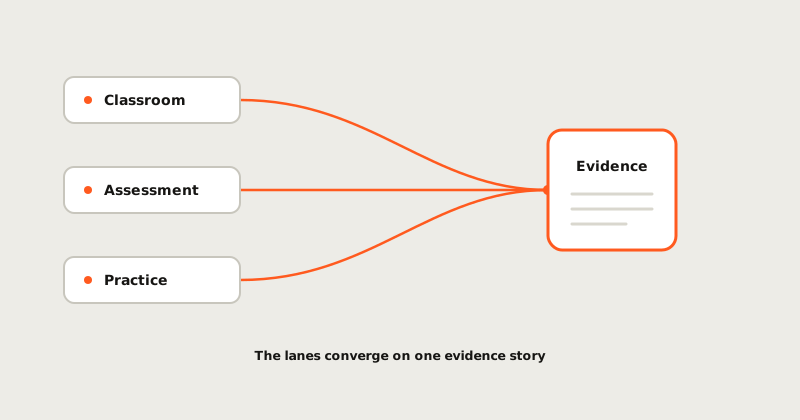
Pick your lane on Practice, Classroom, or the assessments product page depending on whether you are learning, teaching, or hiring.
How to read this update
The important question is not only what shipped. It is what new evidence the product can now preserve. For getting started work, a useful release should make the next session easier to understand: what happened, why it mattered, and what someone can do with the result afterward.
That is the bar we use for field notes. A feature is stronger when it turns a hidden process into something reviewable: a timeline, a report, a map, a score explanation, a replay, or a teacher-facing control. The surface can stay simple, but the evidence behind it should get harder to hand-wave.
What to watch next
The next pass should keep tightening the connection between the public story and the product artifact. If a learner reads a note about practice, they should be able to find the loop in the product. If a teacher reads about classroom control, the setting should be visible. If a hiring team reads about assessment evidence, the report should show the trail.
That is a lesson worth borrowing from the strongest developer tools without copying their design: the best content feels like product memory. It does not decorate the roadmap. It makes the product easier to trust.
Why it belongs in the product story
This update matters because it connects a product surface to a trust surface. The feature is not only a nicer screen; it helps someone understand the work later, whether that person is a learner reviewing a mistake, an instructor debriefing a room, or a hiring team reading an assessment artifact.
That is the standard these notes should keep meeting. If the product claims to measure skill, the public story should keep pointing at the evidence that makes the claim inspectable.