
Puzzle Rush Becomes a Real Mode
Puzzle Rush moved from side activity to a fuller practice loop with queueing, timed sessions, battle-style UI, and cleaner problem repetition rules.
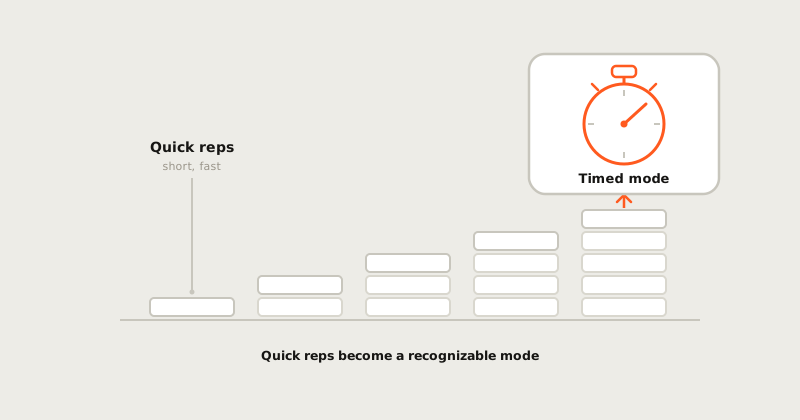
Puzzle Rush is built for a faster, denser kind of practice than a full battle, tuned for recognizing patterns under time pressure.
What changed
We expanded Puzzle Rush with queueing, timed sessions, a battle-style interface, clearer session setup, and cleaner repetition rules. The mode started to feel less like a side experiment and more like its own loop inside Compete.
Some days you need a full coding round, and other days you need rapid reps that force you to read, reason, and move.
How a match works
You pick how long the match will run before you queue. Each length has its own queue, so you only meet players who chose the same one. The search starts near your Puzzle Rush rating and widens to nearby skill levels the longer you wait. If nobody turns up, a bot takes the other seat.
Once the match starts, both players race the same clock through a stream of puzzles. A solve earns points. Harder puzzles are worth more, and a puzzle solved quickly earns a bonus on top of its base value. Skipping a puzzle costs points. When the clock runs out, the higher score wins. The result moves a Puzzle Rush rating, which is kept separate from the rating you earn in coding battles.
What counts as a puzzle
The pool mixes five kinds of short tasks. A debug puzzle hands you code with a bug in it to find and fix. A reorder puzzle scrambles the lines of a working solution and asks you to put them back in order. An algorithm puzzle is a small problem checked against test cases, and an interview puzzle is a classic interview question in the same format. A Python puzzle shows a function that checks an answer and asks for an input that makes it return true, so you work backward from the check to a value that passes it.
Repetition rules
Puzzle Rush keeps a record of the puzzles you have already seen. Each new match draws from the ones you have not seen first, and it only brings back old puzzles once the unseen ones run out. In a mode made of short reps, a puzzle you have met before can be answered from memory, and a fast answer from memory says nothing about whether you would recognize the pattern cold.
Why it matters
Speed isn't the whole skill, but it exposes weakness fast. A learner who can't recognize a pattern or trace state under mild pressure finds out quickly, instead of discovering it for the first time in an interview.
A round in a blank IDE can hide a weak spot behind sheer time, because you eventually grind to the answer and never notice the pattern you failed to recognize on sight. Short, timed reps strip that cushion away, so the gap shows up while it is still cheap to fix.
Where it points
Puzzle Rush will keep feeding the larger practice system with more question variety, better history, and clearer feedback about which patterns a learner is actually improving.