Changelog

What's new

User-visible product updates across practice, compete, classroom, assessments, and platform reliability. Search or filter by area, and open any entry for detail. Longer technical deep dives live in Research and Blog.

79 updates

Recruiter fit controls and Discord identity

Recruiters can review fit scores, AI-suggested re-weighting, and clearer attention cards before acting on candidate results.

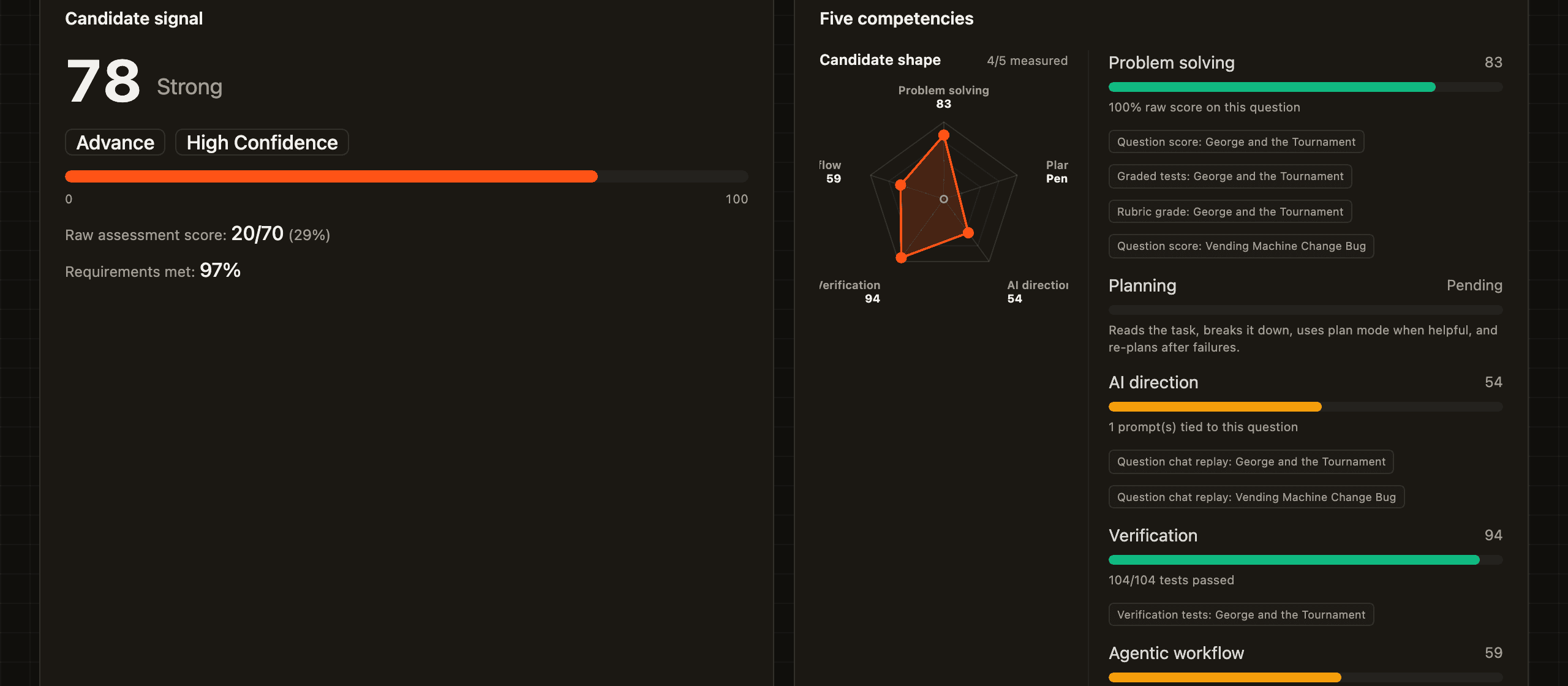
An assessment review surface with evidence and scoring context.
July 8, 2026: Recruiter fit controls and Discord identity.

Company website context now helps the recruiter copilot tailor assessment drafts without asking for the same background repeatedly.

Discord verification, account linking, and ELO rank-role sync landed as server-side identity integrations.

Course catalog, quizzes, and ranked stability

The course catalog now covers 30 CS courses, with database, operating systems, and data-structure quiz authoring filled out in tracked batches.

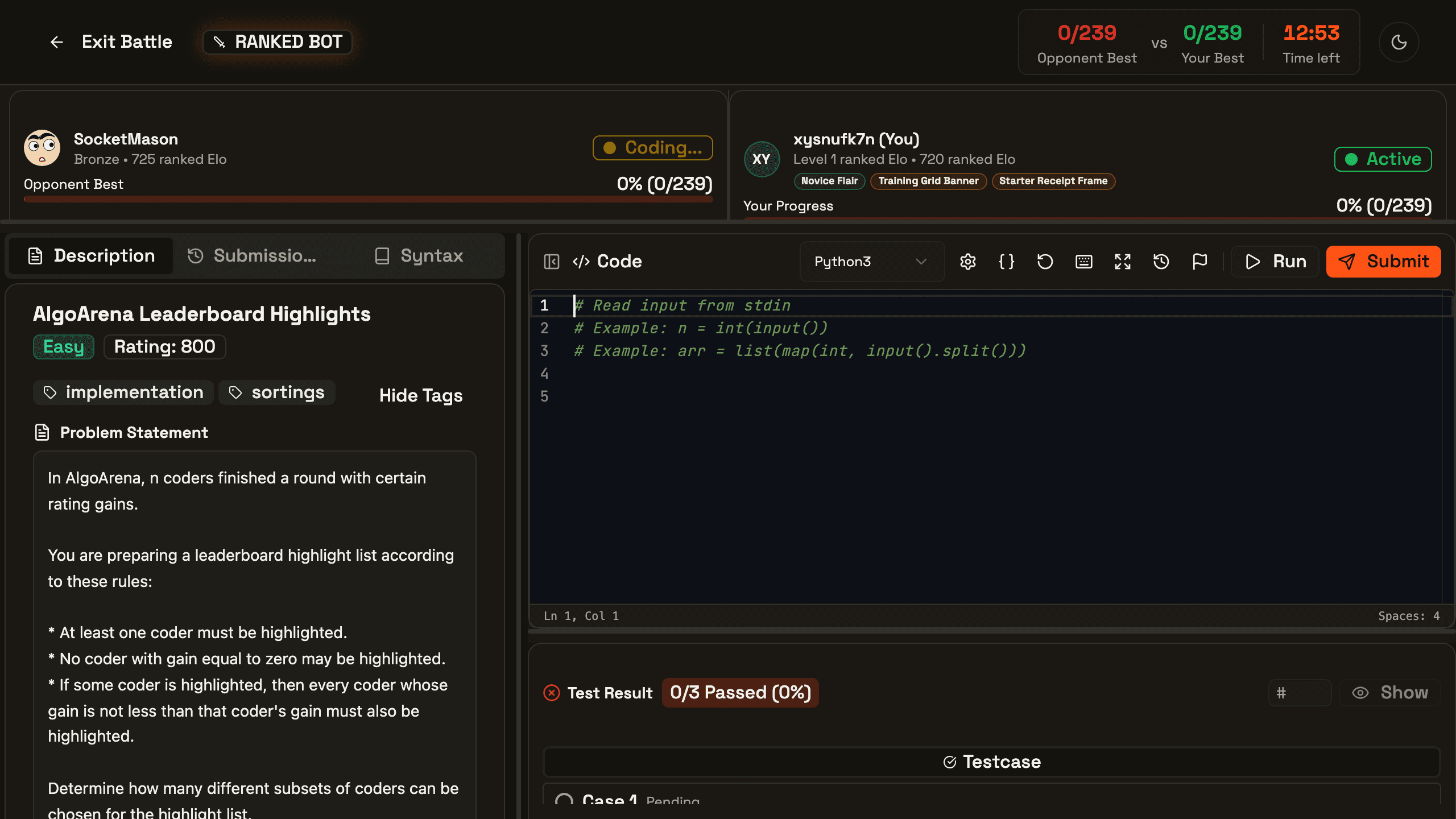
A live classroom coding surface with teacher controls and student work.
July 7, 2026: Course catalog, quizzes, and ranked stability.

Classroom and quiz media gained reusable crop controls so cover and branding images can be framed before upload.

Ranked ELO finalization, abandonment handling, leaderboard visibility, and match-found notifications were hardened around server-authoritative writes.

Shared agent workspace and attribution

Assessment agents now work from the same shared workspace as editor chats, with no separate promote ceremony or private file universe.

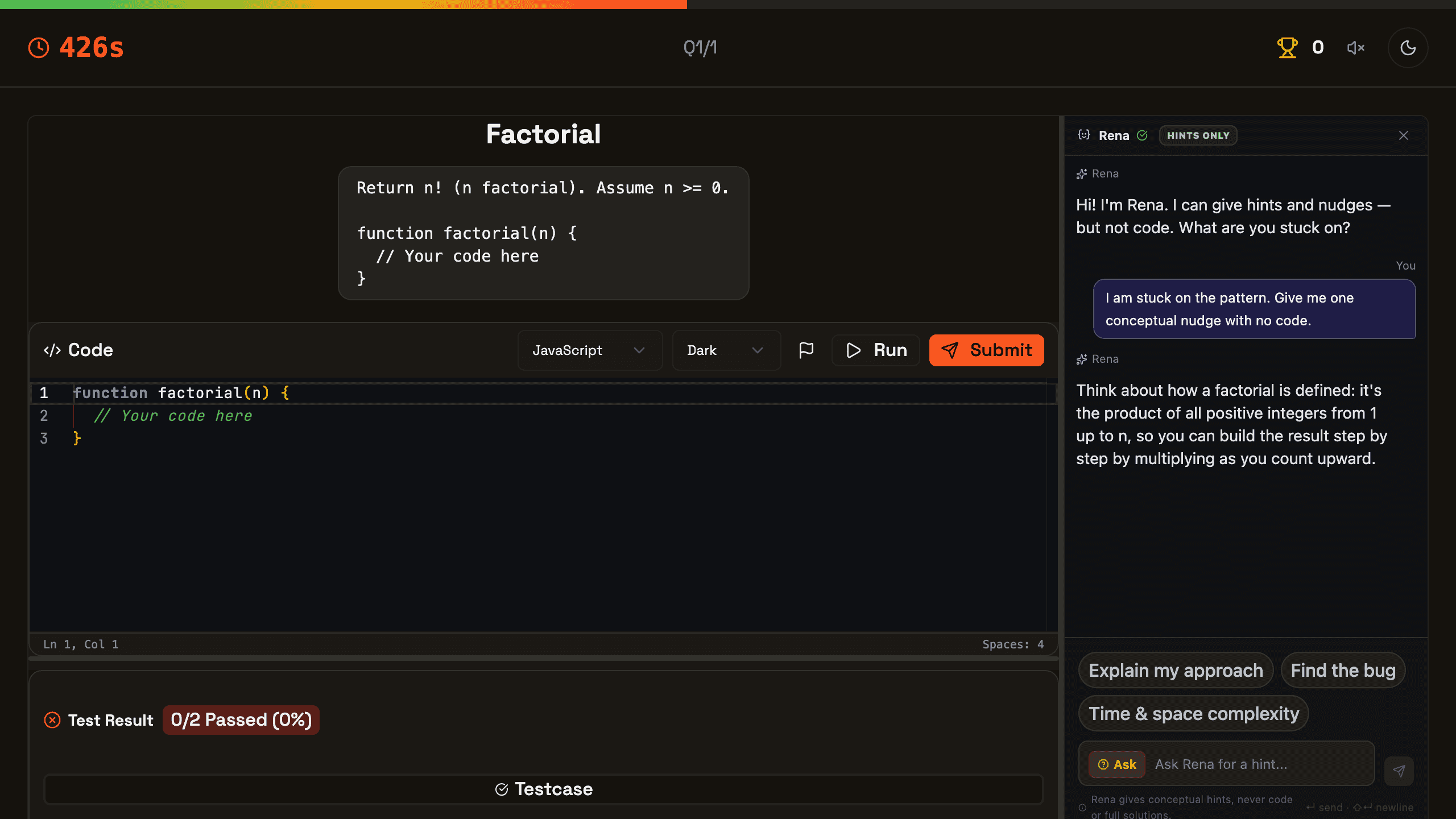
A competitive coding workspace with a live clock and result context.
July 6, 2026: Shared agent workspace and attribution.

Per-agent attribution, queued prompts, review panes, and live lane transcripts make multi-agent work easier to inspect.

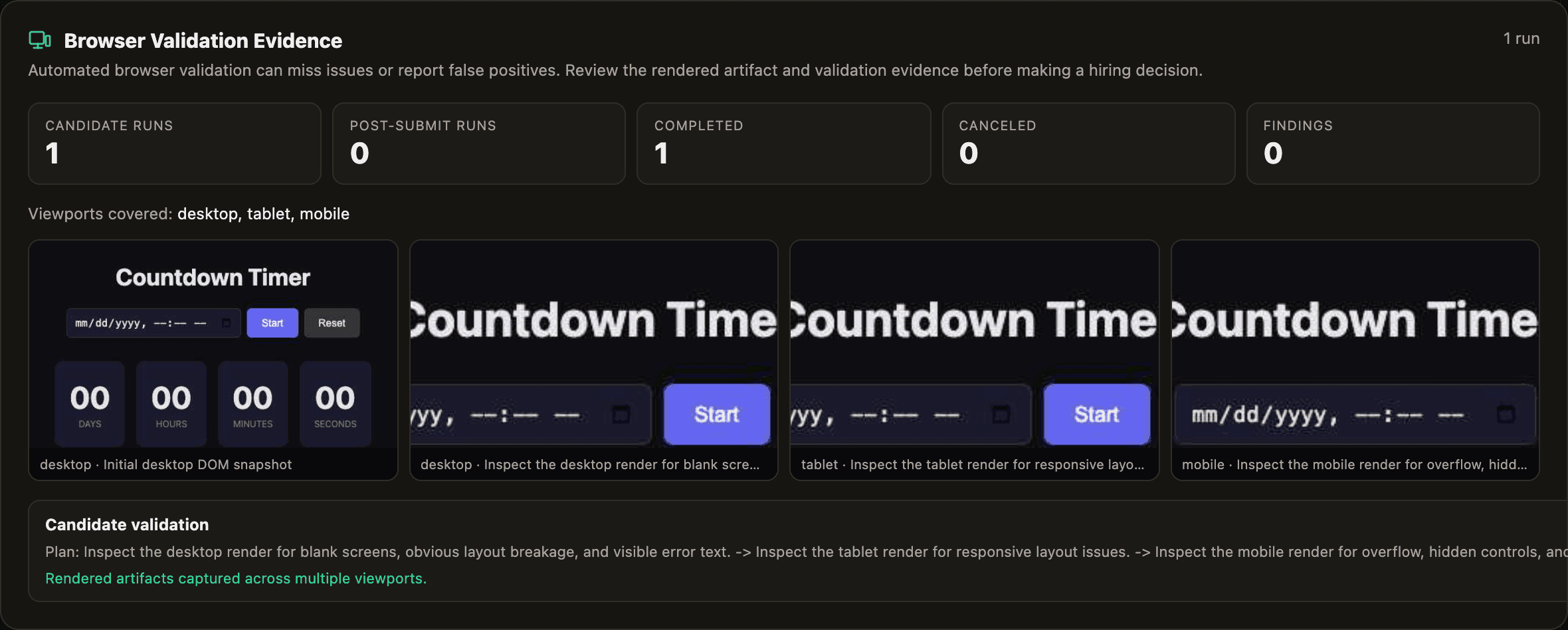
Browser validation became agent-invoked, while Learn gained campaign map, lesson battle, and boss-progress polish.

Verification proofs and lifecycle emails

Assessment sessions gained richer verification proof cards, walkthrough artifacts, replay evidence, and read-first review metrics.

An assessment review surface with evidence and scoring context.
July 5, 2026: Verification proofs and lifecycle emails.

Agent lanes can now be reviewed and approved from the editor surface instead of forcing a context switch.

Welcome, friend-request, challenge, and rank-up emails made account and competition lifecycle events easier to follow.

Assessment IDE evidence polish

Validation timing now waits for active work to settle, while skip and cancel states resolve immediately and honestly.

An assessment review surface with evidence and scoring context.
July 4, 2026: Assessment IDE evidence polish.

The candidate IDE gained evidence docks, plan cards, step playback, clean diff grammar, and clearer before/after screenshots.

Chat presentation, thinking rows, code peeks, and fix-with-AI recovery flows were tightened around inspectable assessment work.

JD-first assessment creation and templates

Recruiting Copilot can start from a pasted job description, propose builder settings, and draft realistic questions behind approval cards.

The Arena 90 campaign map with authored practice routes.
July 3, 2026: JD-first assessment creation and templates.

Assessment templates became first-class objects with a dedicated filter and one-click clone flow.

Arena 90 encounters, classroom avatars, hero selection, and learn-battle practice rounds made the practice surfaces feel more authored.

Agent tab, evidence metrics, and recruiter dashboard focus

The Agent surface became a top-level recruiter workspace with history, a full-screen copilot layout, and @-file mentions in assessment chat.

A live classroom coding surface with teacher controls and student work.
July 2, 2026: Agent tab, evidence metrics, and recruiter dashboard focus.

Public evidence metrics were tightened to use schema-correct definitions for accounts, matches, classroom players, problems, and languages.

Recruiting dashboard tables, settings, filters, and changelog cards were restyled into denser work surfaces without changing the product palette.

Guided assessment workflow and inference routing groundwork

Assessment creation moved into a guided four-step flow: questions, rules and integrity, invitations, and review/publish.

An assessment review surface with evidence and scoring context.
July 1, 2026: Guided assessment workflow and inference routing groundwork.

The recruiter dashboard gained a primary Agent tab, inline invitations, cleaner draft editing, and a consolidated assessment detail layout.

Groundwork landed for routing AI inference through managed cloud model chains, staged behind a flag that is not yet enabled, while Learn gained optional technique lessons and richer practice rounds.

Learn battles and research topic routes

Learn lessons can now play as battles, with lesson enemies, boss progress, campaign maps, and completion ticks.

A competitive coding workspace with a live clock and result context.
June 30, 2026: Learn battles and research topic routes.

Research moved into the blog topic model so technical notes share the same archive and topic navigation as product writing.

Checker worker-pool hardening made special-judge runs safer against timeouts and runaway checkers.

Security hardening and multilingual Learn completion

The Learn track completed coverage across 17 supported languages, including OCaml and the full set of translated language tracks.

An assessment review surface with evidence and scoring context.
June 29, 2026: Security hardening and multilingual Learn completion.

A dedicated security-hardening pass tightened protections across AI and assessment routes.

Blog, research, and changelog pages received light-mode fixes, inline figures, and stronger field-note visuals.

Assessment copilot and browser-grounded reports

Assessment Copilot gained server threads, company analytics context, candidate-scope context, and a clearer Ask AI tab.

An assessment review surface with evidence and scoring context.
June 28, 2026: Assessment copilot and browser-grounded reports.

Candidate reports gained interview packet generation, explainable verdicts, browser-grounded evidence, and homepage signal positioning.

Research posts adopted inline figures and a stronger claim-method-result-limitation structure.

ATS integrations and question generation

Greenhouse, Ashby, and Lever integration scaffolding landed with signed OAuth state, provider configuration, and a connection store in our database.

An assessment review surface with evidence and scoring context.
June 27, 2026: ATS integrations and question generation.

The recruiter question generator gained conversational refinement, version history, revert support, and legacy-debug question batches.

Beginner learners route into Learn more clearly, while assessment headers gained faster publish controls.

Inference routing groundwork and profile rewards

Assessment, classroom, student practice, text, and judging AI routes gained groundwork for managed cloud inference chains, staged behind a flag that is not yet enabled.

A live classroom coding surface with teacher controls and student work.
June 26, 2026: Inference routing groundwork and profile rewards.

Profile locker rewards, assessment workflow evidence strips, and privacy accuracy fixes improved the public product contract.

The judge pipeline gained cost reporting, broader negative-solution runs, and production-faithful test execution.

Agentic assessment question bank and visual system

The agentic assessment bank grew toward 50 UI work-sample questions across spec-driven, debug, and brownfield formats.

A live classroom coding surface with teacher controls and student work.
June 25, 2026: Agentic assessment question bank and visual system.

Candidate review, evidence tabs, reports, builders, and notification accents moved onto the warm AlgoArena theme tokens.

Team member management, model pricing checks, testimonial rails, and screenshot-capable model picking were cleaned up around the assessment story.

Vibecoding course and ambient assessment AI

The Vibecoding course split into its own served surface with textbook chapters, slides, labs, rubrics, syllabus, and project checkpoints.

An assessment review surface with evidence and scoring context.
June 24, 2026: Vibecoding course and ambient assessment AI.

Assessment AI shifted toward ambient browser validation, validator loops, and multi-agent defaults.

Token-spend evidence, model allowlists, stronger judge models, and brownfield question specs tightened how AI-assisted work is graded.