
From Demos to Signal
A June product note on live demos, fuller judging, cleaner assessment evidence, and the work of making AlgoArena easier to trust.
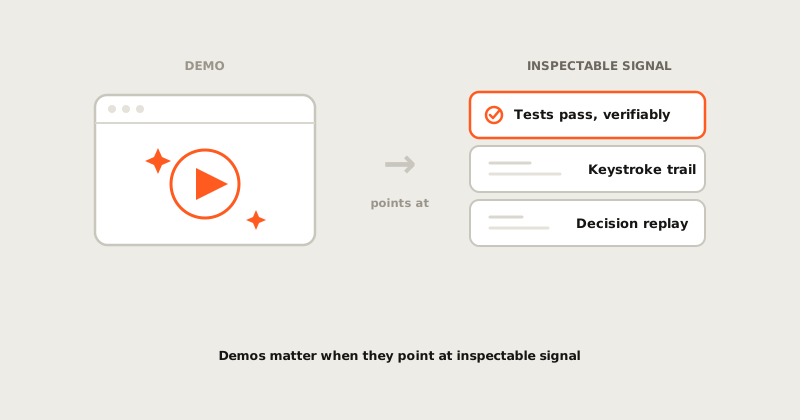
AlgoArena has always had a simple promise: skill should be visible in the work itself. This release cycle was about making that promise easier to see from the outside.
What changed
We tightened the public product surfaces around live demos, clearer product pages, and assessment artifacts that explain what happened instead of just showing a final score. The Compete surface now does a better job showing the full loop: read the prompt, write code, run tests, submit, and compare progress in a live 1v1 IDE.
On the assessment side, we continued improving fuller judging, special-output checks, and evidence views that help reviewers understand the path behind a candidate's result. That matters because hiring teams should not have to guess whether a score came from strong reasoning, lucky tests, or shallow automation.
Why it matters
Public product pages are not just marketing polish. They are a trust surface. If the demo looks vague, the product feels vague. If the demo shows real constraints, real submissions, and real feedback, the story becomes much easier to believe.
The deeper move is from claim to evidence. Anyone can write "we measure real skill" on a landing page. A demo that shows the actual constraints, a real submission, and the feedback it produces lets a skeptical buyer check the claim instead of taking it on faith. That is the whole arc of this cycle: from demos that look impressive to surfaces that are verifiable.
That is why the homepage now points people toward specific lanes: Builder, Compete, Vibecoding Courses, Classroom, and Assessments. Each lane has a different audience, but the same underlying goal: make the process observable.
Where it points
The next step is evidence that travels cleanly across the product. Practice should teach. Classrooms should reveal where a group is stuck. Assessments should explain why a candidate's work is trustworthy. The benchmark direction is part of that same arc: not just prettier demos, but measurable signal.
How to read this update
The important question is not only what shipped. It is what new evidence the product can now preserve. For product work, a useful release should make the next session easier to understand: what happened, why it mattered, and what someone can do with the result afterward.
That is the bar we use for field notes. A feature is stronger when it turns a hidden process into something reviewable: a timeline, a report, a map, a score explanation, a replay, or a teacher-facing control. The surface can stay simple, but the evidence behind it should get harder to hand-wave.
What to watch next
The next pass should keep tightening the connection between the public story and the product artifact. If a learner reads a note about practice, they should be able to find the loop in the product. If a teacher reads about classroom control, the setting should be visible. If a hiring team reads about assessment evidence, the report should show the trail.
That is a lesson worth borrowing from the strongest developer tools without copying their design: the best content feels like product memory. It does not decorate the roadmap. It makes the product easier to trust.