 AlgoArena Team 4 min read
Live Classroom Coding Without Chaos: Host Notes for CS Educators
Practical tips for running synchronous coding sessions: pacing, visibility, anonymous guests, and how to debrief without shame.
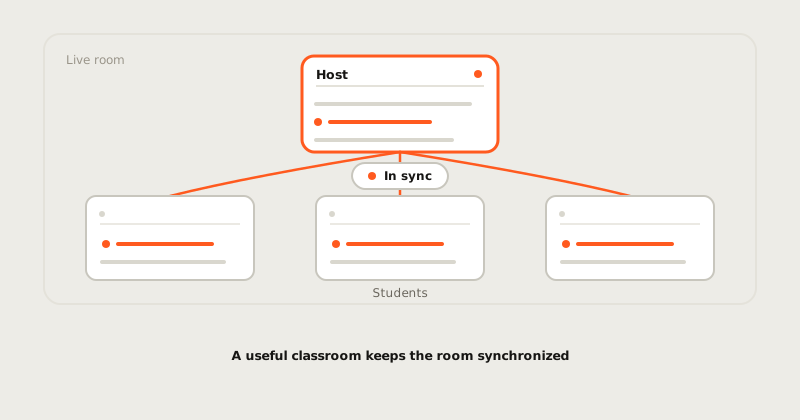
Running a live coding session in front of thirty students is part performance, part logistics. The goal is not to show off. The goal is for students to see decision-making in motion and still leave with dignity intact.
Before class (reduce unknowns)
- Test the flow on the same network you will teach from.
- Decide what is visible to students (prompt, starter code, timer) and what stays private until you choose to reveal it.
- If you allow guests, plan how names show up so participation stays respectful.
During class (one invariant at a time)
Students learn more when you narrate why you are trying an approach, not only what you typed.
The reason is that finished code is the least teachable artifact in the room. Students can copy what you typed; they cannot copy the thinking that chose it. When you say the quiet part out loud (why the brute-force version is fine to start, which cost you are actually trying to cut, why you rejected the clever idea), you teach the part that transfers to the next problem, the one you will not be there to solve with them.
Try this cadence instead of jumping straight to code.
- Restate the problem in plain language.
- Propose a brute idea and its cost.
- Improve one bottleneck at a time.
- Only then optimize for style.
After class (debrief like a coach)
Ask two questions:
- What was the fastest correct decision we made?
- Where did we almost go wrong, and what signal caught it?
Avoid turning the debrief into a ranking of students. The point is shared debugging literacy.
Why this matters for hiring-shaped courses
Many students first meet timed code in interviews, not in lectures. Live sessions normalize the clock without teaching panic, especially when you pair timers with grace and clear rules about submission.
If you are building a course around weekly arenas or quizzes, anchor the culture early: speed is a skill, shame is not a pedagogy.
If you host live sessions, Classroom is built for CS classrooms and quiz nights.
How to read this update
The important question is not only what shipped. It is what new evidence the product can now preserve. For classroom work, a useful release should make the next session easier to understand: what happened, why it mattered, and what someone can do with the result afterward.
That is the bar we use for field notes. A feature is stronger when it turns a hidden process into something reviewable: a timeline, a report, a map, a score explanation, a replay, or a teacher-facing control. The surface can stay simple, but the evidence behind it should get harder to hand-wave.
What to watch next
The next pass should keep tightening the connection between the public story and the product artifact. If a learner reads a note about practice, they should be able to find the loop in the product. If a teacher reads about classroom control, the setting should be visible. If a hiring team reads about assessment evidence, the report should show the trail.
That is a lesson worth borrowing from the strongest developer tools without copying their design: the best content feels like product memory. It does not decorate the roadmap. It makes the product easier to trust.