
The First Feedback Loop
The first post-launch iteration focused on reliable sign-in, fairer matching, public progress, and the small details that make practice feel alive.
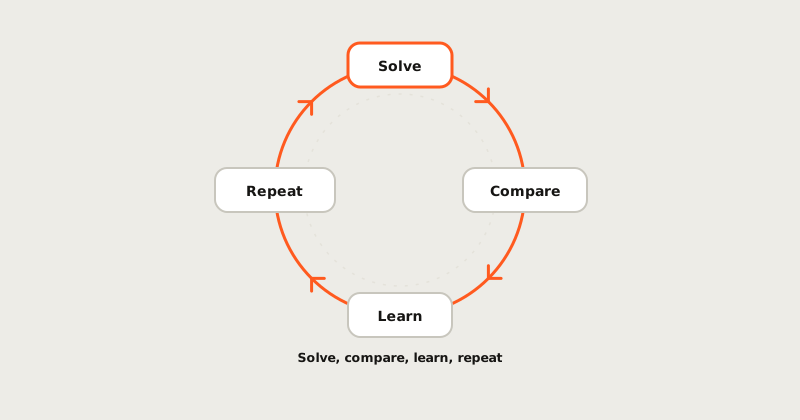
The week after launch was about reducing friction. A practice product cannot build trust if the basics feel brittle.
What changed
We improved sign-in options, made matchmaking more reliable, cleaned up public progress surfaces, and strengthened the early profile and leaderboard loops. These are not flashy changes, but they are the kind of changes that make a product feel real.
The early loop was already clear: enter a round, solve under pressure, review the result, and come back better. The work after launch was about making that loop easier to repeat.
Why it matters
Practice depends on momentum. If a learner cannot get into a match, trust the result, or see what changed after a session, the product loses the feeling that every rep counts.
This is why the unglamorous work comes first. A clever feature sitting on top of flaky sign-in or matchmaking you cannot trust does not build a habit. It builds a reason to leave. Momentum is fragile in exactly the boring places: can I get in, can I trust the result, can I see what changed. Get those right and the loop starts to feel alive; get them wrong and nothing built on top of them matters.
Public progress also matters. A leaderboard or contribution graph is not just vanity when it is handled well. It lets learners see their consistency and growth, and feel the product respond to their effort.
Where it points
This was the first step toward the connected product family AlgoArena is becoming. Compete needed a reliable loop first. Classroom, Assessments, Builder, and Vibecoding all build on that same idea: make the work visible, then make the feedback useful.
How to read this update
The important question is not only what shipped. It is what new evidence the product can now preserve. For product work, a useful release should make the next session easier to understand: what happened, why it mattered, and what someone can do with the result afterward.
That is the bar we use for field notes. A feature is stronger when it turns a hidden process into something reviewable: a timeline, a report, a map, a score explanation, a replay, or a teacher-facing control. The surface can stay simple, but the evidence behind it should get harder to hand-wave.
What to watch next
The next pass should keep tightening the connection between the public story and the product artifact. If a learner reads a note about practice, they should be able to find the loop in the product. If a teacher reads about classroom control, the setting should be visible. If a hiring team reads about assessment evidence, the report should show the trail.
That is a lesson worth borrowing from the strongest developer tools without copying their design: the best content feels like product memory. It does not decorate the roadmap. It makes the product easier to trust.
Why it belongs in the product story
This update matters because it connects a product surface to a trust surface. The feature is not only a nicer screen; it helps someone understand the work later, whether that person is a learner reviewing a mistake, an instructor debriefing a room, or a hiring team reading an assessment artifact.
That is the standard these notes should keep meeting. If the product claims to measure skill, the public story should keep pointing at the evidence that makes the claim inspectable.